





Uses Of Copper Alloys
Product description
China's copper culture has a long history, with the progress of The Times, the development of science and technology, a variety of copper alloys have also appeared, enriching our history and culture. Copper alloy is divided into many kinds, composed of copper and zinc alloy is brass, copper and nickel alloy is white copper, bronze is copper and other elements other than zinc and nickel formed alloy, mainly tin bronze, aluminum bronze, etc., and copper is a high copper content of copper, other impurities in the total content of less than 1%. Brass, as the main additive element of copper alloy, has a beautiful yellow color, collectively referred to as brass.
Tin-copper alloys have excellent physical and chemical properties, so they are widely used in many fields.
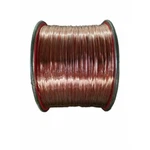
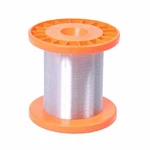
Tin-copper alloy, 0.3% tin-copper alloy wire: Sn content 0.3%, Cu content remaining, IACS≥ 75%, tensile strength ≥530, extension line minimum φ≥0.05mm, use: medical and other special core wire, Features: strong tensile and bending resistance. 0.6% tin-copper alloy wire: Sn content 0.6%, Cu content remaining, IACS≥ 75%, tensile strength ≥530, extension line minimum φ≥0.08mm, Use: replace cadmium copper wire, used for audio and other special wire, can also be made of special copper foil wire.
Product characteristics
Tin-copper alloy according to different tin content, conductivity is different, the industry commonly used for tin content 0.3%, conductivity is about 75% of the hard state, 80% of the soft state.
Alloys have the following properties:
(1) the melting point of most alloys is lower than the melting point of any of the constituent metals;
(2) the hardness is greater than that of any metal in its components;
(3) The electrical and thermal conductivity of the alloy is lower than that of any component metal.
Using this property of alloys, high resistance and high thermal resistance materials can be manufactured. It has good formability. Hot dip tin, welding and plating properties are very good. It also has good corrosion resistance and no stress cracking corrosion. Material in medium strength and good conductivity
Tinned copper wire detinning process - electronic and communication industry uses a large number of tinned copper wire, in the process of production and use of tinned copper wire, inevitably produce a large number of waste tinned copper wire, the treatment of this part of tinned copper wire, the first part is used for the production of bronze alloy, for other applications, are required to remove the tin layer on the copper wire, so, It is very important to select the appropriate detinning process to achieve less investment, easy operation, good detinning effect and less copper loss.
Lead contained in the welding process can be replaced by lead-free welding technology. Due to the different welding equipment, lead-free welding materials are also different. Tin-copper alloy, tin-silver alloy or tin-silver-copper alloy is generally used for hand welding, tin-copper alloy can be used for dip welding and wave welding, and tin-silver alloy and tin-silver-copper alloy can be used for reflow welding.
Application field
The application of copper alloy in the electronics industry, copper alloy is cheap, has high strength, electrical conductivity and thermal conductivity, processing performance, needle welding and corrosion resistance is excellent, through alloying can control its performance in a wide range, can better meet the performance requirements of the lead frame, has become an important material for the lead frame. It is currently the most used steel material in microelectronic devices.
Connector pins, industrial electrical parts, automotive safety boxes, semiconductor lead frames.
Tin copper alloy wire can be processed and derived from a variety of cables, such as power cables, communication cables, control cables, special cables, these cables are widely used in power, railway, communications, aviation, medical, transportation, construction, ships and other industries.


Physical property
In terms of physical properties, tin-copper alloy wire has good electrical conductivity, thermal conductivity, high strength, corrosion resistance, high temperature stability.
QA&QC Quality assurance and quality control
Quality and control standards meet BS EN13601 ASTM B846 ASTM B624 American standard ASTM B105/624, European standard (EN13602), Japanese standard (JIS H3260), DIN CEN/TS 13388, BS EN 50149, GB/T 5231, GB/T 21652, etc.
Packing, storage, handling and transportation
After the completion of the production of tin copper alloy must be strictly in accordance with the customer and industry standards for packaging, storage, handling and transportation, to ensure that the product is not damp, not hurt.
During the transportation of the product, take protective measures such as moisture proof (wrap the product with four square plastic bags on rainy days), anti-bruise (fix the product with a wooden frame to prevent the product from rolling and bruise), and each delivery is delivered at the scheduled time.
Conductor storage environment, storage period
Storage conditions of finished products at ambient temperature ≤35℃, relative humidity ≤65%. (The storage life of the conductor must meet the requirements of temperature and humidity)
PARTNERS

Hot Tags: uses of copper alloys, China uses of copper alloys manufacturers, suppliers, factory
Previous
CuMg Copper AlloyYou Might Also Like


Send Inquiry