


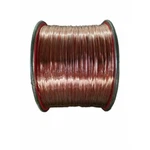


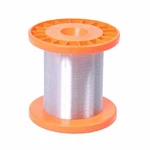

Astm B196
Products Description
See National Standard ASTM B196 B196M-2018 Copper Beryllium alloy bars and rods
Tin-copper alloys have excellent physical and chemical properties, so they are widely used in many fields.
The strength of tin-copper alloy is higher than that of pure copper, which is suitable for the production of some high-strength products. Connector pins, industrial electrical parts, automotive safety boxes, semiconductor lead frames.
Tin-copper alloy is a common metal alloy, which is composed of copper and tin two metals mixed in a certain proportion, the commonly used tin content of 0.3%, the conductivity is slightly higher. It is a low-tin-copper alloy with a higher softening temperature than pure copper and has good creep, stress relaxation and fatigue resistance. And 0.7% tin, conductivity handicap, not commonly used.
Product characteristics
Tin-copper alloy according to different tin content, conductivity is different, the industry commonly used for tin content 0.3%, conductivity is about 75% of the hard state, 80% of the soft state.
It has good formability. Hot dip tin, welding and plating properties are very good. It also has good corrosion resistance and no stress cracking corrosion. Material in medium strength and good conductivity.
Copper alloy melting point Main specifications/Special functions: Copper alloy impregnation, with low melting point, good wettability characteristics.
Lead contained in the welding process can be replaced by lead-free welding technology. Due to the different welding equipment, lead-free welding materials are also different. Tin-copper alloy, tin-silver alloy or tin-silver-copper alloy is generally used for hand welding, tin-copper alloy can be used for dip welding and wave welding, and tin-silver alloy and tin-silver-copper alloy can be used for reflow welding.
Tinned copper wire detinning process - electronic and communication industry uses a large number of tinned copper wire, in the process of production and use of tinned copper wire, inevitably produce a large number of waste tinned copper wire, the treatment of this part of tinned copper wire, the first part is used for the production of bronze alloy, for other applications, are required to remove the tin layer on the copper wire, so, It is very important to select the appropriate detinning process to achieve less investment, easy operation, good detinning effect and less copper loss.
Application field
The application of copper alloy in the electronics industry, copper alloy is cheap, has high strength, electrical and thermal conductivity, processing performance, needle welding and corrosion resistance.
Tin copper alloy wire can be processed and derived from a variety of cables, such as power cables, communication cables, control cables, special cables, these cables are widely used in power, railway, communications, aviation, medical, transportation, construction, ships and other industries.


Physical property
In terms of physical properties, tin-copper alloy wire has good electrical conductivity, thermal conductivity, high strength, corrosion resistance, high temperature stability.
QA&QC Quality assurance and quality control
Quality and control standards meet BS EN13601 ASTM B846 ASTM B624 American standard ASTM B105/624, European standard (EN13602), Japanese standard (JIS H3260), DIN CEN/TS 13388, BS EN 50149, GB/T 5231, GB/T 21652, etc.
PARTNERS

Hot Tags: astm b196, China astm b196 manufacturers, suppliers, factory
Previous
Astm B197You Might Also Like


Send Inquiry